
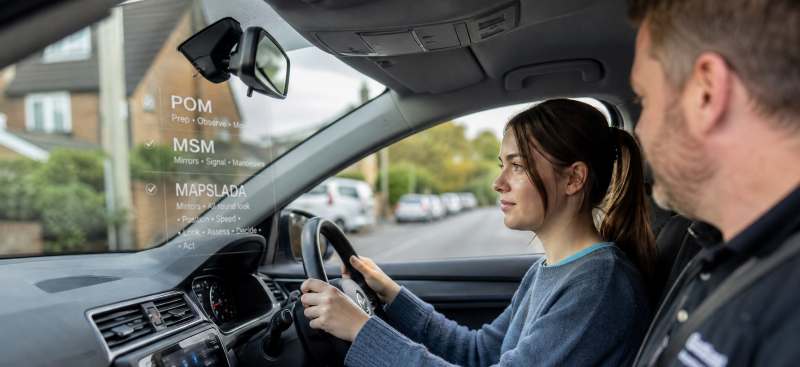
When you’re learning to drive, it can feel like there’s a lot to remember all at once. From clutch control to road positioning, it’s easy to get overwhelmed. That’s where driving acronyms come in.
Good driving instructors use simple, memorable acronyms to help learners build safe habits quickly—whether you’re taking manual or automatic driving lessons. In this guide, we’ll break down the most important ones, including POM, MSM, and MAPSLADA, along with a few extras to help you feel more confident behind the wheel.
What Are Driving Acronyms?
Driving acronyms are memory aids used during driving lessons to help you follow the correct sequence of actions in different situations—like approaching a junction, changing lanes, or moving off safely.
They’re especially useful when learning to drive because they:
- Reduce panic and hesitation
- Build consistent driving habits
- Help you pass your driving test
- Improve overall road safety
Manual vs Automatic Driving Lessons
Whether you choose manual or automatic driving lessons, these acronyms remain the same—they’re about awareness and safety, not just vehicle control.
- In manual driving lessons, acronyms like POM also involve clutch and gear coordination.
- In automatic driving lessons, you can focus more on observation and decision-making, making acronyms even easier to apply.
Why These Acronyms Help You Pass
Using acronyms consistently during driving lessons helps you:
- Develop safe, repeatable routines
- Show clear decision-making to the examiner
- Reduce mistakes caused by rushing or forgetting steps
- Build confidence while learning to drive
Final Thoughts
Mastering these driving acronyms is one of the quickest ways to improve your skills and confidence on the road. Whether you’re just starting out or refining your technique with experienced driving instructors, they’ll help you stay calm, organised, and in control.
If you’re currently learning to drive or thinking about starting driving lessons, practising these acronyms regularly will make a real difference—both in your lessons and on your driving test.
If you’d like help putting these into practice, and want to learn with experienced driving instructors get in touch.