
Before you start the engine and head off on your driving lesson, there’s something important you need to check: your mirrors.
Correctly adjusted mirrors help you see what’s happening behind and alongside your car, making it easier to spot other vehicles, cyclists and potential hazards.
It’s one of the first things you’ll learn during your driving lessons, and a good habit to develop from the very beginning.
Why Is Adjusting Your Mirrors Important?
Your mirrors give you valuable information about what’s happening around your vehicle.
You’ll use them regularly when moving off, changing speed, turning, changing lanes and approaching junctions.
But if they’re not positioned correctly, you might not be able to see approaching traffic clearly.
Even if you’re driving the same car every lesson, it’s worth checking your mirrors before setting off, particularly if someone else has driven the car since your last lesson.
One important tip: Always adjust your seat and driving position before setting your mirrors. Changing your seating position afterwards can affect what you can see.
How to Adjust Your Rear-View Mirror
Your interior rear-view mirror helps you see the road and traffic directly behind your car.
To adjust it:
- Sit comfortably in your normal driving position.
- Adjust the mirror so you can see as much of the rear window as possible.
- Make sure the view is centred, rather than showing too much of one side.
You should be able to glance at the mirror without needing to move your head or change your seating position.
How to Adjust Your Wing Mirrors
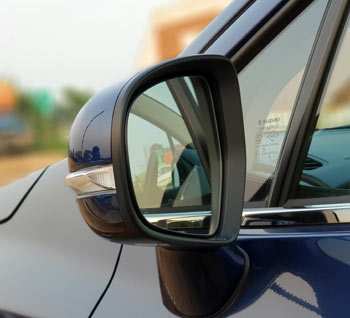
Your wing mirrors, also called door mirrors or side mirrors, help you see traffic approaching from behind and alongside your vehicle.
Most modern cars have electric mirror controls, although some vehicles have manually adjustable mirrors.
Adjusting the Right Wing Mirror
While sitting in your normal driving position, adjust the mirror so that:
- You can see a small section of the side of your car.
- You have a clear view of the road behind and alongside you.
- The road and surrounding traffic are visible without having to lean forwards or sideways.
Adjusting the Left Wing Mirror
Follow the same approach for the passenger-side mirror.
You should be able to see a small part of your car and a good view of the road behind.
Your instructor will help you find the correct position for the vehicle you’re learning in.
Don’t Forget About Blind Spots
Even when your mirrors are adjusted correctly, they can’t show you everything.
There will still be areas around your vehicle that aren’t visible through the mirrors, known as blind spots.
That’s why it’s important to make appropriate blind spot checks before moving off or changing lanes, rather than relying on mirrors alone.
You can find out more in our guide to blind spots when driving.
When Should You Check Your Mirrors?
Getting your mirrors into the correct position is only the beginning. You also need to get into the habit of using them at the right time.
As a general rule, you should check your mirrors before changing speed or direction, including when:
- Slowing down or stopping.
- Turning left or right.
- Changing lanes.
- Overtaking another vehicle.
- Moving off or pulling over.
Your instructor will help you understand which mirrors to check in different situations and how to use the information to make safe decisions.
Learning Good Driving Habits From the Start
Adjusting your mirrors is part of the cockpit drill, the series of checks you’ll learn before setting off in a car.
During your driving lessons, your instructor will help you get comfortable with these checks, understand how to use your mirrors effectively and develop the observation skills you’ll need for safe driving.
At first, remembering everything might seem like a lot, but with practice, checking and using your mirrors will become a natural part of driving.
And remember, good mirror use isn’t just about passing your driving test. It’s a skill you’ll rely on every time you get behind the wheel.
