
Your driving test is booked, the date is getting closer and suddenly you’re imagining every possible thing that could go wrong.
What if you stall? What if you forget everything you’ve learnt? What if you make a mistake in the first five minutes?
Sound familiar?
First things first – feeling nervous about your driving test is completely normal. Even learners who are confident during their lessons can suddenly find themselves worrying about test day.
I’ve been helping people learn to drive for over 30 years, and believe me, I’ve seen my fair share of nervous learners. Some are quiet, some talk non-stop, and others suddenly decide they’ve forgotten how to drive altogether!
The good news is that there are things you can do to help manage those nerves, both before and during your test.
Why Do We Get So Nervous About Driving Tests?
There’s quite a lot riding on your driving test. You’ve invested time and money in lessons, you’re looking forward to the freedom of driving independently, and naturally, you want to pass.
You might also be worried about disappointing your family, your instructor or yourself.
But here’s something worth remembering.
Your driving test isn’t about being perfect. It’s about showing that you can drive safely.
The examiner isn’t expecting you to drive like someone who’s been on the road for 30 years. They want to see that you can make safe decisions, recognise hazards and handle everyday driving situations.
And those are all things you’ve been practising during your lessons.
8 Practical Ways to Calm Your Driving Test Nerves
1. Don’t Tell Everyone Your Test Date
This is one of my favourite pieces of advice.
There’s nothing wrong with telling friends and family when your test is, but sometimes it adds unnecessary pressure.
Suddenly everyone wants to know how you’re feeling, whether you’re ready and what time they should expect the good news.
If you’d rather keep the date to yourself, that’s absolutely fine.
You can always surprise everyone afterwards!
2. Get a Good Night’s Sleep
I know, easier said than done when your brain decides that midnight is the perfect time to replay every roundabout you’ve ever encountered.
But try to get a decent night’s sleep before your test.
Avoid staying up late watching driving test videos or cramming in last-minute revision. By this point, you should already know what you need to do.
Have something to eat beforehand too. You don’t want to be distracted by a rumbling stomach halfway through your test.
3. Have a Lesson Before Your Test
Most learners have a lesson with their instructor before heading to the test centre.
It’s a chance to settle into the car, get comfortable and practise anything you’re particularly concerned about.
But I wouldn’t recommend trying to squeeze in everything you’ve ever learnt during that final hour.
If there’s a manoeuvre or junction you’re worried about, have a quick practice. Otherwise, concentrate on driving normally and building your confidence.
The last thing you need is to arrive at the test centre feeling exhausted.
4. Try Some Simple Breathing Techniques
When we’re nervous, we sometimes breathe more quickly without realising it. This can make us feel even more anxious.
Before your test, try taking a few slow, comfortable breaths.
Breathe in gently, then breathe out slowly. Don’t force it or hold your breath for too long.
You can also relax your shoulders and loosen your grip on the steering wheel.
It sounds simple, but reducing that physical tension can help you feel more settled.
Just make sure you’re concentrating fully on the road once you’re driving.
5. Don’t Compare Yourself to Other Learners
Perhaps your friend passed first time with hardly any faults. Wonderful for them.
But their driving test has absolutely nothing to do with yours.
Everyone learns differently. Some people pick up manoeuvres quickly but struggle with busy junctions. Others are confident in traffic but get nervous when someone starts assessing them.
And plenty of perfectly capable drivers don’t pass first time.
Concentrate on your own progress rather than someone else’s.
6. Remember That One Mistake Doesn’t Mean You’ve Failed
This is a big one.
You might stall at a junction, take the wrong turning or feel you’ve made a mess of a manoeuvre.
It’s very easy to convince yourself you’ve failed and spend the rest of the test worrying about it.
But not every mistake results in a serious fault, and taking a wrong turning isn’t a fault in itself if you deal with it safely.
You can pass your practical driving test with up to 15 driving faults, provided you don’t make any serious or dangerous faults.
So if something doesn’t go quite to plan, deal with it safely and carry on.
Don’t let one moment spoil the rest of your drive.
7. Ask the Examiner to Repeat an Instruction
If you don’t hear or understand something the examiner says, just ask them to repeat it.
There’s no need to panic or guess what they meant.
And remember, the examiner isn’t there to trick you.
If you’re following a sat nav and miss a turning, that’s not automatically a problem either. The important thing is to continue driving safely rather than making a sudden last-minute change of direction.
8. Treat It Like Another Driving Lesson
Yes, I know it’s easier to say than do!
But try to think of your test as another drive where you’re putting your skills into practice.
You’ve already dealt with junctions, roundabouts, pedestrian crossings and all sorts of other situations during your lessons.
The difference is that your instructor won’t be giving you the usual reminders.
And if your instructor believes you’re ready for your test, that’s because they’ve seen you demonstrate the skills you need.
Trust what you’ve learnt.
What If Your Nerves Get the Better of You During the Test?
It happens.
You might suddenly feel overwhelmed, forget what you were going to do or find your hands shaking.
If that happens, try not to think about the entire test. Concentrate on the immediate driving situation.
What’s happening ahead? What’s your speed? Is there anything you need to respond to?
Focus on one safe decision at a time.
If you feel too overwhelmed to continue safely, tell the examiner. You can ask to pull over somewhere safe to compose yourself, although the examiner will need to manage this within the test arrangements.
The most important thing is not to rush or make unsafe decisions because you’re nervous.
What If You’ve Failed a Driving Test Before?
A previous unsuccessful test can make the next one feel even more daunting.
You might be worried about repeating the same mistake, particularly if you came close to passing.
But an unsuccessful test doesn’t erase everything you’ve learnt.
Look at the feedback with your instructor and work out what needs improving. It might be a particular manoeuvre, observations at junctions or simply managing the pressure of being assessed.
Sometimes a few focused lessons and a mock test can make a real difference.
At Geoff Capes Driving School, we offer Driving Test Rescue lessons for learners who need extra help preparing for another attempt.
The aim isn’t just to get you through the next test. It’s to make sure you’re ready and confident enough to drive independently afterwards.
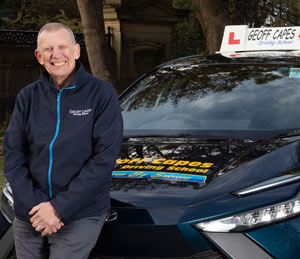
Geoff’s Final Advice: Give Yourself a Bit of Credit
Here’s some things I often remind learners.
> Think back to your very first driving lesson.
> Perhaps you weren’t sure which pedal was which, steering felt like a juggling act and approaching a roundabout seemed like a major event.
> Now look how far you’ve come.
> You’re preparing to drive independently, making decisions and dealing with situations that once seemed impossible.
> That’s quite an achievement.
> Of course, you’ll be nervous. Your driving test matters to you, and there’s nothing wrong with that.
> But don’t let the nerves convince you that you can’t drive.
> You’ve put the work in. You’ve developed the skills. Now give yourself the chance to show what you can do.
And whatever happens on the day, remember that passing your test is only the beginning of becoming an experienced driver.
Good luck – and don’t forget to breathe!
Need a Little Extra Help Before Your Driving Test?
If you’re struggling with driving test nerves, speak to your instructor. Sometimes talking through your worries and having a few focused lessons can help you feel much more prepared.
At Geoff Capes Driving School, our friendly, experienced instructors understand that everyone learns differently. We’ll help you build confidence at a pace that suits you, without shouting or unnecessary pressure.
You can also read our guide to what happens during your practical driving test so you know exactly what to expect.
And if nerves affect your driving more generally, our driving confidence lessons may help you feel more comfortable behind the wheel.
Want to discuss driving lessons or check availability? Give our friendly office a call on 0161 327 2105. We’re always happy to help.
